
When a business changes its address, the notification list runs well beyond the moving company and the landlord. Federal tax records, state business filings, local licenses, financial accounts, and every website or directory that lists your company’s information all need the update, and missing even one can mean delayed mail, lapsed licenses, or fraud alerts on financial accounts. A complete address change checklist covers government agencies first, then financial institutions, then the public-facing listings your customers use to find you.
Whenever you relocate your business, you need to make sure your address is updated everywhere it is listed so you can be found by clients, customers, vendors, and service providers. Our team at CRS Moving & Storage has guided New York City companies through commercial relocations for years, and the checklist below covers every agency, account, and listing worth updating, along with how our crews handle the physical side of the move.
Internal Revenue Service (IRS)
Relocating to a new address should be reported to the Internal Revenue Service as soon as your move is confirmed. Keeping your federal tax information current helps make sure notices, refunds, and other correspondence reach your business without delay.
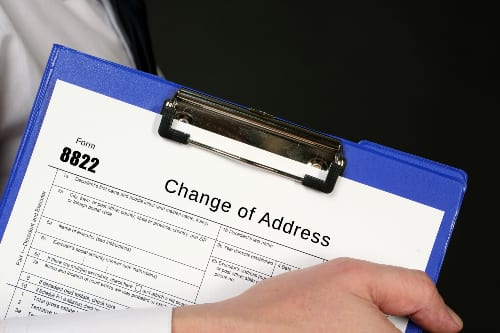
To update your address with the IRS, complete Form 8822-B, Change of Address or Responsible Party and mail it to the address listed on the form. If your move also changes who holds responsibility for your business’s tax matters, the IRS asks that you report that change within 60 days. Processing generally takes a few weeks, so submitting the form as soon as your new address is confirmed can help you avoid a gap in tax correspondence.
Secretary of State and State Licensing Boards
Depending on how your business is structured, changing your address may require amending your organizing documents, such as your Articles of Incorporation or Articles of Organization. Corporations, LLCs, and other registered entities typically file these updates with the Secretary of State’s office in the state where the business is registered.
Contact the Secretary of State’s office directly for instructions and any applicable fees, and check whether your business holds any state-issued licenses that also need an address update. Even a company that plans to work from home or use a virtual business address may still need to update its address with the Secretary of State, so confirm the requirement before assuming a physical office is the only trigger. If your company is relocating across state lines, our guide on moving an LLC to another state covers the additional filings that interstate moves can require.
State Department of Revenue
Your state’s department of revenue needs your updated address on file so that sales tax notices, income tax correspondence, and other filings reach the right place. If you are moving within the same state, this update is usually straightforward and low-stakes.
Moving out of state is more involved. You will likely need to close your account with your old state’s department of revenue and open a new account in the state where your business now operates. Reviewing the tax side of a relocation before moving day can help you avoid a surprise notice later, and our breakdown of corporate moves and tax implications covers what typically changes.
City, County, and Local Government Offices
Any local licenses or permits your business holds, such as a certificate of occupancy, health permit, or signage permit, will need an updated address from the city, county, or town that issued them. Requirements vary widely across New York City’s boroughs and the surrounding counties CRS serves, so check with each issuing office directly rather than assuming one update covers every permit.
Local compliance touches more than paperwork. Building departments, fire marshals, and zoning offices may also want to confirm your new location meets code before you open for business, so it is worth starting this conversation early in your moving timeline.
Business Financial Institutions and Credit Accounts
All financial accounts should reflect your company’s new address, including bank accounts, merchant accounts, investment accounts, and any loans or credit lines your business holds. Vendors, suppliers, and service providers with active accounts need the same update so invoices, statements, and contracts keep arriving without interruption.
A single missed update can lead to more than a late invoice. Financial institutions and vendors that still have your old address on file are also a common blind spot for fraud, since redirected mail is one of the easier ways for bad actors to intercept sensitive account information. Before your move, take a pass through:
- Bank, merchant, and investment accounts
- Business loans, credit lines, and lender relationships
- Vendor, supplier, and recurring service contracts
Once each of these is updated, confirm the change went through by checking your next statement or invoice rather than assuming the request was processed.
United States Postal Service and Mail Forwarding
The US Postal Service is one of the most important places to update, since it is the safety net for anything you miss elsewhere. Filing a change of address with USPS makes sure mail still addressed to your old location gets forwarded rather than returned or lost, and USPS’s guidance for managing business mail outlines both the standard and premium forwarding options available to companies.
Business movers should also plan for what happens to paper records during the transition itself. If your relocation involves shredding old files or digitizing what you keep, our guide to document shredding versus digital archiving can help you decide what to keep on hand and what to retire. Once your new address is active, verify your mail forwarding is working by checking for a few weeks rather than assuming it caught everything on the first try.
Registered Agents, Credit Bureaus, and Insurance Providers
A few notification targets are easy to overlook because they are not agencies in the traditional sense. If your business uses a registered agent for legal and state correspondence, update that address as part of your move, since a missed service of process notice can create real legal exposure. Major business credit reporting agencies also maintain your company’s address on file, and each has its own process for requesting an update, usually with verification that you are an authorized officer of the business.
Insurance providers, from general liability to commercial property coverage, need your new address as well, both for accurate billing and because your policy terms may depend on the location being covered. Confirming these updates before your move reduces the chance of a coverage gap on moving day itself.
Website, Directory Listings, and Social Media
Your website, Google Business Profile, and any local directory listings need the same address update as everything else, and this one affects more than customer convenience. Inconsistent name, address, and phone information across the web can hurt your local search rankings, so update every listing at once rather than one at a time.
Social media accounts that display your business’s address need the same attention, and most platforms let you make the change directly from your business profile settings. If your move also involves updating exterior signage or other branding at your new location, our overview of relocating corporate signage and exterior branding covers what to plan for.
How CRS Moving & Storage Supports a Smooth Business Relocation
Updating this many agencies, accounts, and listings is a lot to manage on top of an actual move. Most of the businesses CRS Moving & Storage works with tackle this checklist alongside their moving timeline rather than after the fact, and our team plans the physical side of your relocation, coordinating packing, transport, and setup at your new location, so you can focus on the notifications and filings that only your business can complete.
We also work with businesses across NYC, Los Angeles, San Diego, and New Jersey, and our crews are familiar with the building access rules, freight elevator windows, and permitting quirks that can slow down a commercial move in any of these markets. Once your notification list is underway, our tips for announcing your office relocation can help you keep employees, clients, and vendors informed while the paperwork above is in progress.
CRS Moving & Storage has managed commercial relocations, corporate storage, and warehousing for businesses across the New York City area for years, with crews who understand high-rise logistics, tight loading dock schedules, and the building regulations that make city moves more complex than a standard office move. Our team plans each relocation around your operational needs rather than a generic checklist, which is part of why so many NYC businesses return to us for their next move or storage need.
If your business is planning a move, our team can walk through both the paperwork above and the moving logistics that go with it, from packing timelines to storage options if your new space is not ready on day one. Reach out to build a moving plan that covers both sides of your relocation by completing our contact form.
Frequently Asked Questions About Notifying Contacts When Your Business Moves
How soon after moving should I notify the IRS of my new address?
The IRS recommends updating your address as soon as your move is confirmed by filing Form 8822-B, Change of Address or Responsible Party. If your move also changes who is responsible for your business’s tax matters, that change generally needs to be reported within 60 days. Filing early can help you avoid a gap in tax notices or refund correspondence while the form is processed.
Do I still need to notify the Secretary of State if I am only moving across town?
In most cases, yes. Any change to your registered business address typically needs to be filed with the Secretary of State’s office, even for a short move within the same city or state. Requirements and fees vary by state, so it is worth confirming the exact process with your state’s office before your move.
What happens if I forget to update my address with USPS?
Mail sent to your old address may be returned to the sender or delayed rather than forwarded, which can mean missed invoices, tax notices, or client correspondence. Filing a change of address with USPS before your move helps make sure anything sent to your old location still reaches you during the transition.
Should I notify my bank and vendors before or after moving day?
Notifying financial institutions and vendors before your move is generally the better approach. Updating your address ahead of time helps prevent a gap in billing or account statements and reduces the chance that mail sent to your old address is intercepted or used fraudulently.
Do I need to update my registered agent’s address when my business relocates?
If your business uses a registered agent, their address on file with the state generally needs to reflect your new location as part of your relocation paperwork. A registered agent receives legal notices on your company’s behalf, so an outdated address here can mean missing a time-sensitive filing or service of process notice.
Can updating my online listings after a move affect my local search rankings?
Yes, in many cases it can. Search engines use consistent name, address, and phone information across your website, Google Business Profile, and directory listings to help confirm your business’s location. Outdated or conflicting addresses across these listings can weaken your local search visibility, so updating them all at once after a move is worth prioritizing.