
Running a small or medium-sized business means every dollar counts, and logistics costs have a way of quietly eating into margins before most owners realize the damage. Between leasing warehouse space, paying staff to manage inventory, purchasing equipment, and coordinating shipping, the operational overhead required to handle fulfillment in-house can be staggering. For growing businesses that aren’t yet at the scale to justify those fixed investments, the numbers rarely work in their favor.
That’s where a third-party logistics partner changes the equation entirely. At CRS, we offer 3PL services as part of our full suite of warehousing, distribution, and corporate relocation solutions, giving businesses of all sizes a way to access professional logistics infrastructure without taking on the burden of owning or operating it themselves.
How 3PL Partnerships Drive Real Cost Savings
The overhead reductions that come from working with a 3PL provider aren’t abstract. They show up in specific, measurable ways across your operation. Understanding what drives those savings makes it easier to evaluate whether a partnership makes sense for your business.
Eliminating Warehouse Space Costs
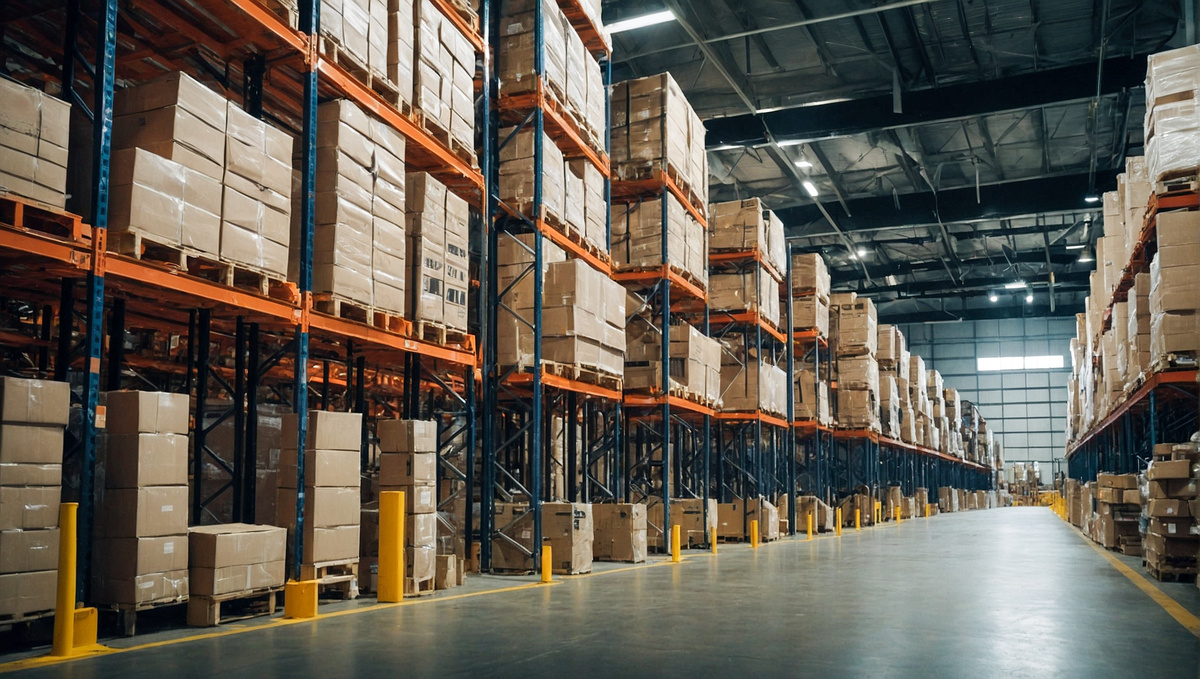
One of the most immediate ways a 3PL reduces overhead is by removing the need to lease, maintain, or staff your own warehouse. For small and medium businesses, a dedicated facility is rarely cost-efficient, because you’re paying for square footage and labor even during slow periods. With a 3PL, you pay only for the space and services you actually use. That shift from fixed to variable costs can have an outsized impact on cash flow, particularly during seasonal fluctuations or periods of growth. To understand more about how warehousing and logistics inventory management works in practice, it helps to look at the full picture of what a modern 3PL facility provides.
Access to Better Freight Rates
3PL providers work with a wide network of carriers and ship significant volume on behalf of many clients at once. That scale gives them negotiating leverage that a single small or mid-size business simply cannot replicate on its own. The result is access to carrier rates and terms that would otherwise only be available to large enterprises. Those savings on inbound and outbound freight can accumulate quickly, especially for businesses with high order volumes or wide distribution needs.
Reducing Labor and Staffing Overhead
Hiring, training, and retaining warehouse staff is expensive. It also introduces ongoing HR obligations, benefits costs, and liability exposure. When you partner with a 3PL, the provider assumes responsibility for its own workforce, which means your payroll shrinks without your fulfillment capacity shrinking alongside it. The staff handling your inventory are professionals whose entire job is logistics, which typically means fewer errors, faster throughput, and less waste than what most small businesses can achieve with in-house teams managing fulfillment as a secondary function.
Technology Without the Capital Investment
Managing inventory accurately requires warehouse management systems, order tracking software, and real-time reporting tools. For a small or medium-sized business purchasing and implementing this technology independently, the upfront cost alone can be prohibitive. A 3PL partner brings those systems to the table as part of the service. Understanding what a 3PL warehouse is and how it works reveals just how much infrastructure is already in place for clients to leverage from day one. Businesses gain the operational capabilities of a sophisticated supply chain without the capital outlay to build one themselves.
Reducing Inventory Carrying Costs
Overstocking ties up capital, occupies space, and increases the risk of loss through damage or obsolescence. Effective inventory optimization through 3PL relies on data-driven demand forecasting and lean inventory practices that most small businesses struggle to execute without dedicated systems and personnel. A well-run 3PL uses real-time inventory data to keep stock levels precise, which reduces carrying costs and frees up working capital that can be reinvested in growth rather than tied up on shelves.
Is 3PL Right for Your Business?
Not every business is in the same position, and the value of a 3PL versus other fulfillment models depends on your volume, product type, and growth trajectory. That said, businesses currently absorbing fixed logistics costs they can’t fully justify, or that are losing time managing fulfillment instead of focusing on their core operations, are typically strong candidates. The overhead reductions outlined above reflect how cost structures actually shift when a business stops trying to run a mini-warehouse and starts letting a professional partner handle it instead.
CRS: Full-Service 3PL and Corporate Logistics for New York and Beyond
CRS has spent over 20 years delivering corporate relocation, warehousing, and 3PL services to businesses across New York and nationally. With more than 5,000 offices moved and a commitment to customized, one-stop logistics solutions, we bring the infrastructure and experience to support businesses at every stage of growth. Our team works to eliminate the inefficiency of managing multiple vendors by handling everything from inventory and distribution to freight and storage under one roof.
If you’re ready to explore how 3PL services could reduce your overhead and free your team to focus on what matters most, reach out to our team today to schedule a free consultation with our logistics specialists.