
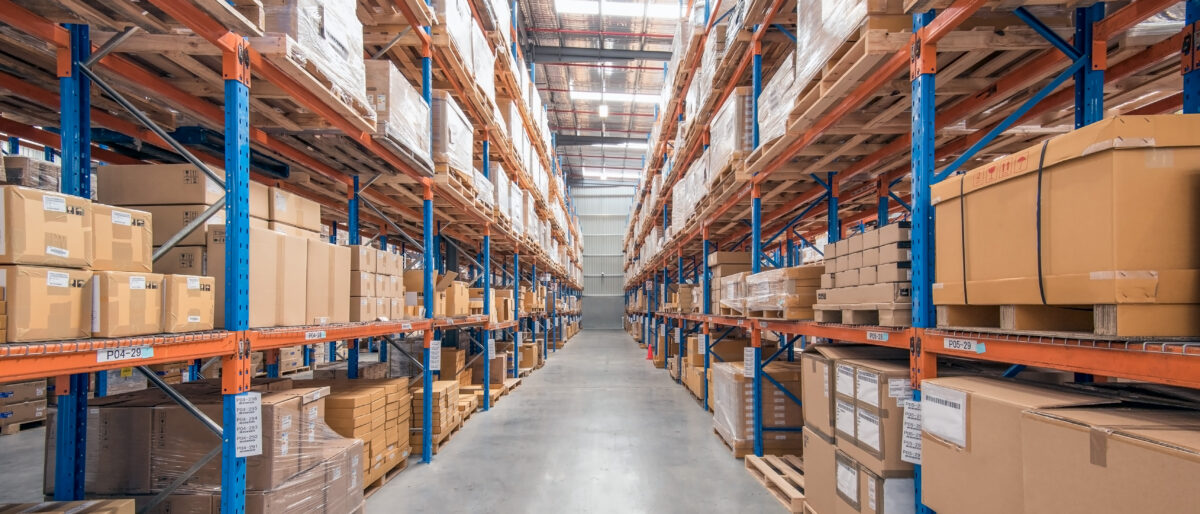
 When a national retailer signs a lease for three new distribution hubs, or a manufacturer wins a contract that doubles its parts inventory overnight, the warehouse space that worked yesterday stops working today. Overflow inventory rarely announces itself in advance. It tends to show up after a merger, a seasonal spike, or a supply chain disruption, and suddenly a company that has never needed outside storage is scrambling to find somewhere secure to put product it can’t yet ship, sell, or use. By the time the issue reaches leadership, pallets and boxes are already stacking up in hallways, loading docks, and parking lots that were never meant to hold them for long.
For enterprise-level operations, that scramble is exactly why so many Fortune 500 companies build a relationship with a third-party logistics partner before they need one, rather than after. CRS Moving & Storage works with large organizations across finance, healthcare, retail, and manufacturing to manage the inventory that outgrows a company’s own four walls, offering third-party logistics solutions built around flexible, secure, and scalable storage rather than a one-size warehouse lease. That kind of partnership tends to matter most for organizations whose inventory volume moves in large, unpredictable swings rather than a steady, easy-to-forecast curve.
Why Overflow Inventory Strains Internal Operations
Most companies size their warehouse footprint around average demand, not peak demand. That works fine until a new product line launches, a competitor exits the market, or a seasonal surge pushes inventory volume well past what the existing space can absorb. When that happens, product ends up stacked in hallways, parking lots, or off-site facilities that were never designed for long-term storage, and the people managing day-to-day operations are left improvising a solution under time pressure.
The strain is not only about square footage. Overflow inventory that is not properly tracked, climate controlled, or secured creates real financial exposure, from spoiled goods to shrinkage to compliance violations. Internal teams built to manage steady-state operations are rarely equipped to also manage a sudden expansion, which is why many organizations look outside their own walls rather than building additional permanent infrastructure for a temporary or unpredictable need. Reviewing warehousing and inventory management options becomes a priority the moment internal capacity runs out.
How Third-Party Logistics Partners Solve the Problem
A 3PL partner gives large companies the ability to scale storage up or down without signing a long-term lease or investing in a facility they may not need in twelve months. That flexibility is part of why logistics management has grown into its own specialized function inside so many large organizations. Rather than treating storage as fixed overhead, enterprise teams increasingly treat it as a variable resource they can adjust in response to what the business is actually doing, month to month or even week to week.
- Scalable square footage that expands during peak periods and contracts once demand settles
- Climate-controlled and secure facilities for sensitive, high-value, or regulated inventory
- Inventory tracking systems that give internal teams visibility into what is stored and where
- Multi-client warehousing that spreads facility costs across several accounts rather than one
CRS supports these needs directly, including warehouse storage built for this exact kind of overflow, along with multi-client warehousing that keeps costs manageable for companies that only need the extra space part of the year.
What to Look for in a 3PL Partner for Enterprise-Scale Storage
Not every storage provider is built to handle enterprise volume. Fortune 500 companies typically look for partners who can demonstrate real experience with large-scale inventory, not just self-storage scaled up to look the part. That includes accurate, auditable inventory counts, which is why inventory cycle counting matters as much as raw square footage when evaluating a provider.
Security and accountability matter just as much as space. A 3PL partner handling enterprise inventory should be able to speak specifically to how it protects high-value goods, tracks chain of custody, and reports discrepancies, rather than offering vague assurances about keeping things safe. Companies evaluating commercial storage options should ask providers to walk through their actual security protocols, insurance coverage, and reporting practices before signing anything.
CRS Moving & Storage Is Your 3PL Partner
Overflow inventory is not a problem most internal teams plan for, which is exactly why it becomes urgent so quickly. Having a 3PL partner already in place means a company can respond to a sudden spike in inventory without pausing operations to figure out where the product will go next.
CRS Moving & Storage has spent years building storage solutions for large organizations that need more than a spare room and a padlock. If overflow inventory is putting pressure on your operations, contact our team to talk through what a flexible storage plan could look like for your company.