
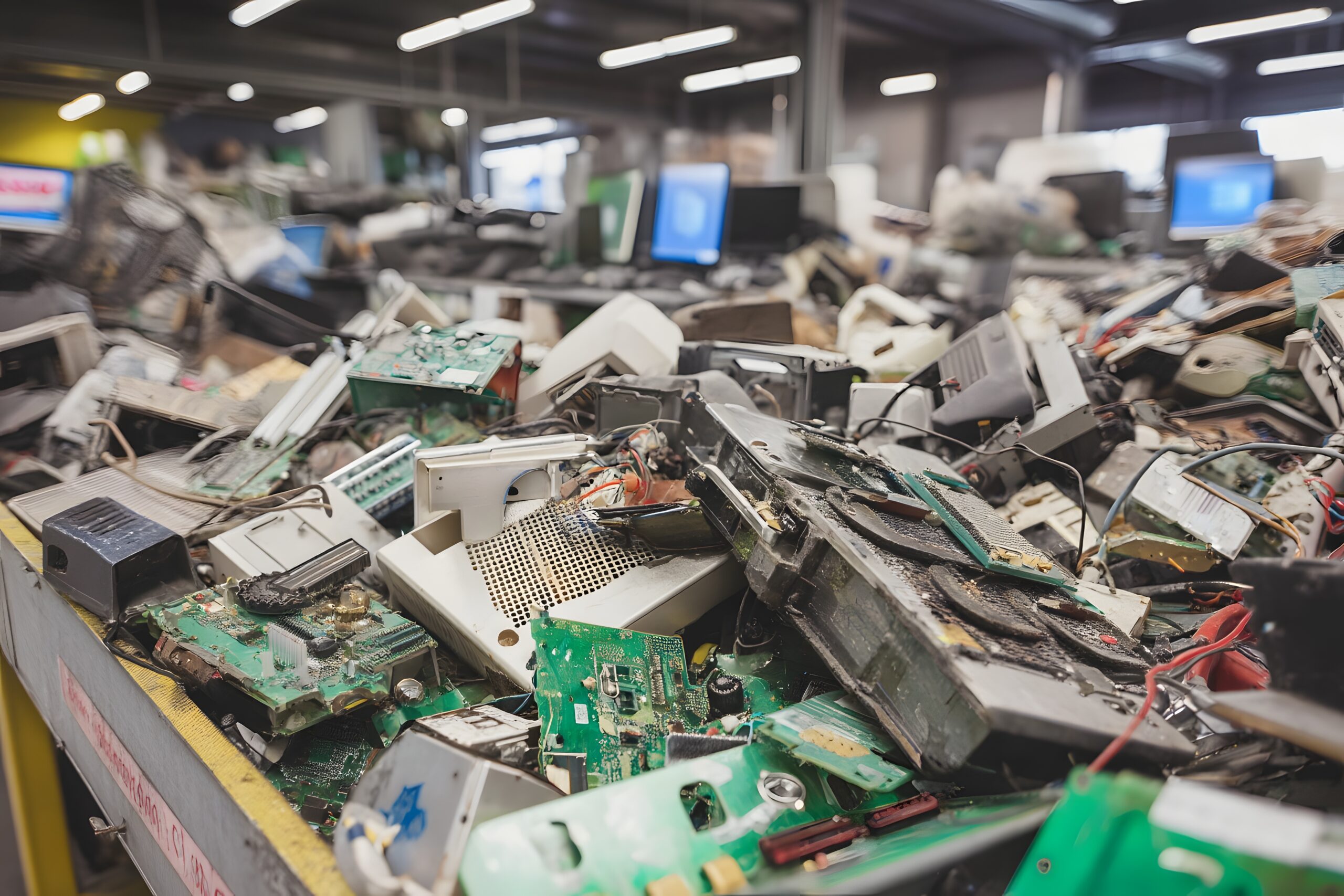
Commercial businesses today face a mounting challenge as outdated computers, monitors, printers, and other electronic equipment accumulate in storage rooms and offices. These devices contain hazardous materials such as lead, mercury, and cadmium that pose environmental risks when improperly disposed of in landfills. Understanding electronics recycling requirements helps businesses avoid costly penalties while demonstrating environmental responsibility to clients and stakeholders.
For businesses operating in New York, navigating electronics recycling regulations becomes even more critical. CRS Moving & Storage provides comprehensive commercial moving and storage services throughout the tri-state area, including proper electronics handling during office relocations and liquidations. With over 20 years of experience managing 5,000+ office moves, CRS ensures your business meets all regulatory requirements while protecting the environment through responsible disposal practices.
Why Do Commercial Businesses Need Electronics Recycling?
Electronic waste poses serious environmental and legal risks when businesses dispose of equipment improperly. Many electronic components contain toxic substances that contaminate soil and groundwater when buried in landfills. Companies must comply with state and federal regulations governing hazardous waste management.
Federal regulations under the Resource Conservation and Recovery Act empower the EPA to oversee electronic waste management. This framework directs businesses on proper disposal methods, emphasizing recycling over landfill disposal. Currently, 25 states plus the District of Columbia have enacted mandatory electronics recycling laws for commercial entities.
What Electronics Must Businesses Recycle?
New York State law requires businesses to recycle specific electronic equipment. Understanding which devices fall under these requirements helps organizations develop compliant disposal strategies.
Commercial businesses must recycle the following electronics:
- Desktop computers and laptops
- Computer monitors and televisions
- Keyboards, mice, scanners, and printers
- Fax machines and copying equipment
- VCRs, DVRs, and DVD players
- Rechargeable batteries and battery-containing devices
- Mobile devices and tablets
These regulations apply regardless of whether businesses purchased equipment new or used. Any electronic device reaching the end of its life must be recycled through certified facilities or manufacturer take-back programs.
How Do Electronics Recycling Requirements Differ by Business Size?
Business size determines eligibility for free manufacturer recycling programs in New York. Small businesses with fewer than 50 full-time employees and nonprofits with fewer than 75 full-time employees qualify for no-cost electronics recycling through manufacturer programs. Larger commercial entities must contract directly with registered electronic waste recycling facilities.
Businesses generating more than 220 pounds of hazardous waste per month may need EPA identification numbers before disposing of it. Organizations should conduct waste determinations to confirm whether electronics contain hazardous materials requiring special handling.
What Are the Penalties for Improper Electronics Disposal?
Non-compliance with electronics recycling laws carries significant consequences. Businesses face substantial financial penalties for improper disposal, with fines funding state recycling programs. Colorado regulations explicitly prohibit non-residential entities from disposing of hazardous electronic waste in solid waste landfills.
Beyond monetary penalties, violations damage business reputations. Environmental responsibility influences customer perceptions and loyalty. Companies labeled as negligent in waste management face decreased trust and potential loss of partnerships.
What Steps Should Businesses Take for Compliant Electronics Recycling?
Developing a comprehensive electronics recycling plan protects businesses from compliance issues. Organizations should start by inventorying all electronic equipment approaching end-of-life status. This assessment helps determine which items require recycling and which require disposal.
Businesses should verify that their recycling partners hold the required certifications. The EPA recommends working with facilities certified under R2 or e-Stewards standards. These certifications ensure recyclers follow industry best practices for environmental protection and data security.
How Can Businesses Protect Sensitive Data During Electronics Recycling?
Data security remains a critical concern when recycling electronics. Simply deleting files or reformatting hard drives does not guarantee complete data destruction. Businesses must use specialized disk wiping software designed to protect sensitive information. Alternative methods include physically destroying hard drives by removing them from devices and damaging internal disk plates beyond recovery.
Many certified recyclers offer data destruction services at an additional fee. Organizations handling confidential client information should prioritize these services to prevent data breaches during recycling.
Partner With CRS Moving & Storage for Compliant Electronics Recycling
Managing electronics recycling requirements during office relocations or liquidations requires careful planning and execution. CRS Moving & Storage has completed over 5,000 commercial moves throughout New York and the tri-state region while maintaining compliance with all environmental regulations. The company holds a GSA contract and maintains affiliations with IFMA and CoreNet Global, demonstrating commitment to industry best practices.
CRS offers integrated solutions that minimize the need for multiple vendors during business transitions. The team provides e-recycling and e-waste services alongside moving, storage, and liquidation services, ensuring proper disposal of electronic equipment. Using eco-friendly reusable bins instead of cardboard, CRS saves over 80 pounds of cardboard with each move and protects more than 1,000 trees annually. Contact CRS Moving & Storage today through our contact form to schedule a consultation for your next office relocation or electronics disposal project.